1. Professional Accounting Career Tips: Why Graphic Design & Video Editing are Essential
In today’s fast-paced financial landscape, accountants need more than just a solid grasp of numbers—they also have to be great communicators and presenters. That’s where graphic design comes into play. By leveraging graphic design techniques, accountants can turn complex financial data into clear, visually appealing reports, infographics, and client presentations. These visual elements can transform dry balance sheets and financial statements into engaging formats that clients can easily grasp. Plus, with the addition of motion graphics, financial insights can be brought to life through short animated videos, making it simpler to explain budgeting, investment strategies, or audit findings. In this digital age, where social media and online presence are crucial, accountants who are savvy in graphic design and motion graphics can create a strong personal brand, attract clients, and really stand out in the industry. So, blending accounting know-how with creative visual skills is a smart move for achieving long-term success in your career.

2.Professional Accounting Career Tips: Video Editing
In today’s digital landscape, even accountants need to cultivate a strong personal brand, and video editing is a key part of that journey. Gone are the days when accountants were confined to their desks; now, many are sharing valuable financial tips, tax updates, and career insights on social media and various online platforms. By mastering video editing, accounting professionals can produce clear, engaging, and informative content that breaks down complex financial ideas into easily digestible pieces. Good video editing enhances presentation quality, incorporates visuals like charts and subtitles, and keeps the audience engaged. This not only boosts credibility but also opens up more visibility, networking opportunities, and avenues for career advancement. So, it’s clear that video editing has become an essential skill for anyone looking to thrive in a modern accounting career within a competitive digital world.
3. Professional Accounting Career Tips: Using SEO to Dominate the Job Market
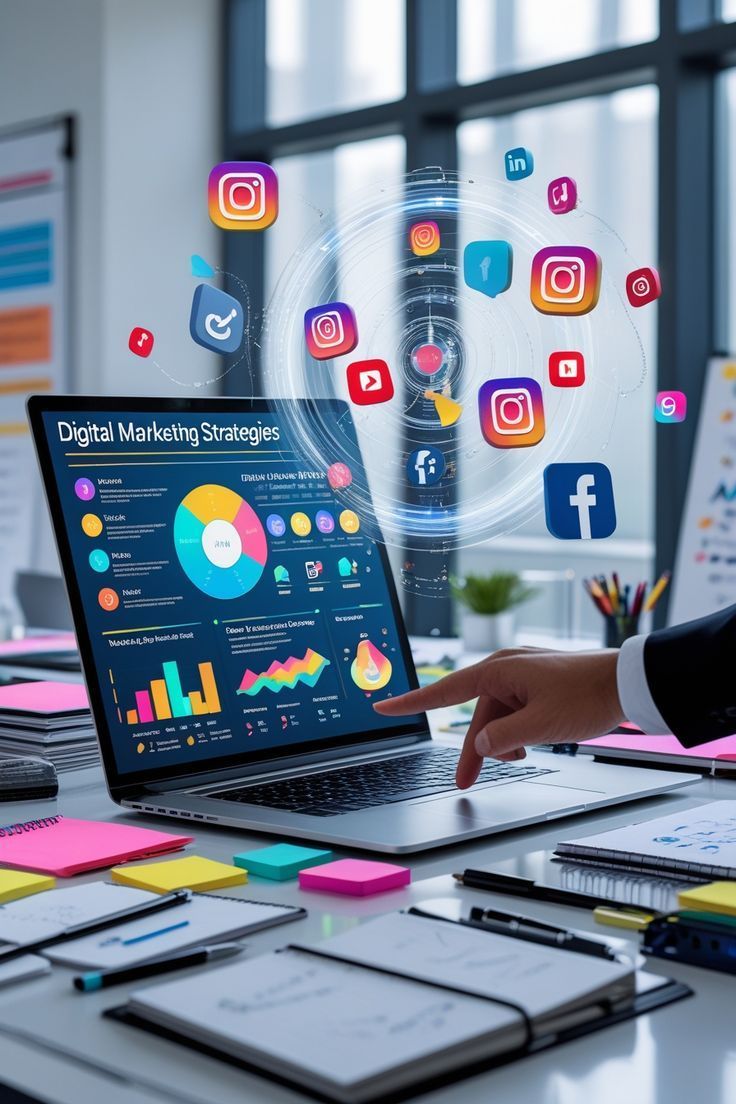
In 2026, the world of finance is no longer just about keeping the books; it’s all about “Search Everywhere Optimization.” At BICA Academy, we get that your skills in Tally or GST are only valuable if potential clients can actually find you. That’s why mastering SEO has become essential—it’s a fundamental part of today’s business strategy. To help you make this shift, we’ve woven impactful Professional Accounting Career Tips into your digital growth strategy. One key tip is to treat your online presence like a financial audit—every detail needs to be accurate, indexed, and clear to build trust with search engines like Google. Why SEO is the Accountant’s New Best Friend Think of SEO as a ledger; it organizes information so it’s easy to access. By applying Professional Accounting Career Tips to enhance your LinkedIn profile and personal portfolio, you can ensure you show up at the top of “near me” searches in Panipat. The ultimate Professional Accounting Career Tip is to become a “Technical Consultant” who grasps both the numbers and the algorithms that boost business visibility. When you merge accounting precision with SEO expertise, you don’t just land a job—you position yourself as a sought-after leader in the industry.
1. **The Shift to “Search Intent”**
Google is no longer just scanning for keywords; it’s searching for answers. Before you even start writing, ask yourself: What is the user hoping to accomplish? – **Informational:** They want to learn (e.g., “What is SEO?”). – **Navigational:** They’re looking for a specific site (e.g., “Google Search Console”). – **Transactional:** They’re ready to make a purchase (e.g., “Buy SEO audit tool”). **Pro Tip:** Do a quick search for your target keyword. If the top 10 results are “How-to guides,” don’t try to compete with a “Product page.” Align your content with the format that Google is already favoring.
2. E-E-A-T: The Trust Equation
In a world filled with AI-generated content, human credibility is the key to ranking well. Google favors content that showcases: – **Experience:** Have you actually used the product or service? – **Expertise:** Do you have the qualifications or in-depth knowledge to discuss this topic? – **Authoritativeness:** Is your site recognized as a reliable resource in your field? – **Trustworthiness:** Is your site secure (HTTPS) and is your information accurate? **Action Step:** Add a detailed Author Bio at the end of each post to show search engines that a real human expert is behind the content.
3. Semantic SEO & Topic Clusters
Instead of focusing on individual keywords, think in terms of topics. – **Pillar Pages:** Create a comprehensive guide on a broad subject.
4. Technical SEO Checklist for 2025
You can have the best writing in the world, but if your site is slow, you won’t rank. Ensure these three things are optimized:
| Feature | Importance | SEO Impact |
| Core Web Vitals | High | Measures how fast and stable your page loads. |
| Mobile-First | Essential | Google indexes the mobile version of your site primarily. |
| Schema Markup | Medium | Helps Google show “Rich Snippets” (stars, prices, FAQs) in search. |
5. Writing for “Featured Snippets”
To land “Position Zero” (the box at the top of Google), structure your content to be easily extracted.
Use H2 and H3 tags that are phrased as questions.
Answer the question directly in the first sentence of the paragraph.
Use bulleted lists for steps or comparisons.

4. Professional Accounting Career Tips: Succeeding in the E-Commerce Sector
In 2025, e-commerce has transformed far beyond the old “click and buy” routine. It’s now a super personalized, AI-powered, multi-channel experience where social media, entertainment, and shopping blend together seamlessly. Whether you’re just starting out as an entrepreneur or you’re a well-established brand, keeping up means really grasping the current digital marketplace landscape. The 2025 E-Commerce Landscape: 5 Key Trends Today’s digital storefront looks nothing like it did ten years ago. Here are the major shifts shaping the industry this year:
1. The Rise of “Social Commerce”
Shopping has shifted from lonely websites to the center of social feeds. Platforms like TikTok, Instagram, and even YouTube now feature integrated checkouts. In 2025, more than 70% of TikTok users reported making a purchase after casually “stumbling” upon a product in their feed.
2. Generative AI as a Shopping Assistant
We’ve moved beyond basic chatbots. Today’s e-commerce leverages Generative AI to: Create Virtual Fitting Rooms: AR (Augmented Reality) tools let customers visualize how clothes fit or how furniture would look in their living room before making a purchase. Hyper-Personalization: AI analyzes real-time behavior to recommend products based not just on past purchases, but even on your current local weather or mood.
3. Sustainable and Ethical Shopping
“Greenwashing” just doesn’t cut it anymore. Consumers in 2025 demand transparency. Brands that thrive now offer a clear view of their supply chain, carbon footprint, and how they treat their workers ethically.
4. Hybrid Commerce (O2O)
The “Online-to-Offline” trend is at its peak. Features like BOPIS (Buy Online, Pick Up In-Store) and curbside pickup connect the ease of online shopping with the instant satisfaction of physical retail.
5. Flexible Payment Ecosystems
Credit cards are no longer the go-to option. Digital wallets (like Apple Pay and Google Pay) and BNPL (Buy Now, Pay Later) services are driving a significant chunk of global spending, making one-click checkout the new standard.
How to Create a Winning E-Commerce Strategy
If you’re gearing up to launch or expand your online store, keep these three key pillars in mind: User Experience (UX) is Your Best Salesperson Since customers can’t physically interact with your products, your website needs to shine as your top salesperson. Mobile-First Approach: With over 60% of traffic coming from mobile devices, if your site isn’t quick and responsive on phones, you’re likely losing potential sales. Visual Appeal: Invest in high-quality, multi-angle images and, whenever possible, include video demonstrations. Master the “Content Loop” Don’t just focus on selling; aim to educate. Create a blog or video series that addresses customer challenges. How-to Guides: “How to select the right skincare for your skin type.” Comparison Posts: “Product A vs. Product B: Which one suits you best?” Behind-the-Scenes: Introduce the people behind your brand to foster trust. Automation and Data Leverage tools to take care of the heavy lifting. Automated email sequences for “Abandoned Carts” or predictive inventory management can save you countless hours and significant revenue losses. The Bottom Line: Is E-Commerce Still a Smart Move? With global e-commerce sales expected to make up over 20% of all retail sales by 2025, the potential is enormous. But remember, the competition is tougher than ever. The brands that will thrive in 2025 won’t just have the best products; they’ll be the ones that cultivate genuine communities and provide seamless digital experiences.

5. Accounting Career Acceleration Tips: Performance Marketing for High-Value Roles
In the fast-paced realm of digital growth, “Performance Marketing” serves as the powerhouse behind measurable success. Unlike traditional brand awareness campaigns, where you might shell out cash for a billboard and just hope it catches someone’s eye, performance marketing guarantees that you only pay for real, tangible results. As we step into 2025, the landscape has shifted dramatically. Privacy regulations are stricter, AI has become more sophisticated, and consumers are increasingly discerning. Here’s your go-to guide for mastering performance marketing in this new age. So, what exactly is Performance Marketing? At its essence, performance marketing is a results-oriented strategy where advertisers only pay when a specific action occurs. This could be anything from a click, a lead, a sale, or even an app download. Let’s break down the “Pay-for-Performance” models: – CPC (Cost Per Click): You’re charged when a user clicks on your ad. – CPA (Cost Per Acquisition): You only pay when a user completes a transaction. – CPL (Cost Per Lead): Common in B2B, you pay when someone signs up for a demo or newsletter. – ROAS (Return on Ad Spend): This is the ultimate goal—how much revenue you generate for every dollar spent. Now, let’s dive into three game-changing trends for 2025:
1. The Age of “Agentic” AI:
By 2025, we’ve moved beyond basic AI chatbots. We now have AI Agents that can autonomously manage campaigns. These tools don’t just suggest keywords; they can dynamically adjust your budget in real-time between platforms like Meta and Google, depending on which one is performing better at that moment.
2. Privacy-First Tracking (Zero-Party Data):
With third-party cookies being phased out completely, top performance marketers are now honing in on Zero-Party Data. This is the information that customers willingly share through interactive quizzes, surveys, and polls. This high-intent data is far more valuable for targeting than the outdated tracking pixels of the past.
3. The Rise of “Retail Media Networks”:
Platforms like Amazon, Walmart, and Uber have emerged as advertising powerhouses. Since they possess the actual purchase data, their ads often outperform traditional social media ads. If you’re selling a product, ensuring a seamless experience on the platform where the user makes a purchase is crucial.
In the fast-paced realm of digital growth, “Performance Marketing” serves as the powerhouse behind measurable success. Unlike traditional brand awareness campaigns, where you might shell out cash for a billboard and just hope it catches someone’s eye, performance marketing guarantees that you only pay for real, tangible results. As we step into 2025, the landscape has shifted dramatically. Privacy regulations are stricter, AI has become more sophisticated, and consumers are increasingly discerning. Here’s your go-to guide for mastering performance marketing in this new age. So, what exactly is Performance Marketing? At its essence, performance marketing is a results-oriented strategy where advertisers only pay when a specific action occurs. This could be anything from a click, a lead, a sale, or even an app download. Let’s break down the “Pay-for-Performance” models: – CPC (Cost Per Click): You’re charged when a user clicks on your ad. – CPA (Cost Per Acquisition): You only pay when a user completes a transaction. – CPL (Cost Per Lead): Common in B2B, you pay when someone signs up for a demo or newsletter. – ROAS (Return on Ad Spend): This is the ultimate goal—how much revenue you generate for every dollar spent. Now, let’s dive into three game-changing trends for 2025:
1. The Age of “Agentic” AI:
By 2025, we’ve moved beyond basic AI chatbots. We now have AI Agents that can autonomously manage campaigns. These tools don’t just suggest keywords; they can dynamically adjust your budget in real-time between platforms like Meta and Google, depending on which one is performing better at that moment.
2. Privacy-First Tracking (Zero-Party Data):
With third-party cookies being phased out completely, top performance marketers are now honing in on Zero-Party Data. This is the information that customers willingly share through interactive quizzes, surveys, and polls. This high-intent data is far more valuable for targeting than the outdated tracking pixels of the past.
3. The Rise of “Retail Media Networks”:
Platforms like Amazon, Walmart, and Uber have emerged as advertising powerhouses. Since they possess the actual purchase data, their ads often outperform traditional social media ads. If you’re selling a product, ensuring a seamless experience on the platform where the user makes a purchase is crucial.

6. Essential Finance Career Pointers: Why the Computer Operator Course is Your First Step
In 2025, being “good with computers” isn’t just a nice-to-have anymore—it’s a must. Whether you’re aiming to break into the corporate scene, land a government job, or kickstart a freelance career, taking a Computer Operator Course is often the essential first step. This blog will walk you through everything you need to know about these courses, from what’s covered in the curriculum to the in-demand job opportunities that await you. What’s a Computer Operator Course? A Computer Operator course (often referred to as COPA or CIT) is a vocational training program that transforms beginners into skilled digital professionals. It dives into the basics of hardware, software, and everyday office tasks. By 2025, these courses have expanded to include not just typing and filing, but also AI-driven productivity tools and the fundamentals of cybersecurity. Core Syllabus: What You’ll Learn Most certification or diploma programs are organized into 3–6 month modules. Here’s a look at the standard curriculum for 2025:
1. Computer Fundamentals & OS – Hardware Basics:
Recognizing components like the motherboard, RAM, and SSD. – Operating Systems: Navigating Windows 11 and Linux (Ubuntu) like a pro. – File Management: Keeping your cloud (Google Drive/OneDrive) and local storage organized.
2. The Productivity Suite (MS Office / LibreOffice) –
Word Processing: Mastering advanced formatting, mail merge, and digital documentation. – Spreadsheets (Excel): Working with pivot tables, VLOOKUP/XLOOKUP, and basic data visualization. – Presentations: Crafting eye-catching slides using PowerPoint or Canva.
3. Data Entry & Typing – Touch Typing:
Striving for a speed of 40+ WPM with 95% accuracy. – Regional Language Typing: Many courses now offer modules in Hindi or other local languages.
4. Internet & Digital Security – Web Navigation:
Utilizing advanced search operators and browser extensions. – Cyber Hygiene: Understanding 2FA (Two-Factor Authentication), spotting phishing attempts, and managing secure passwords.

INCLUDING BASIC OF COMPUTER, ADVANCE MASTER EXCEL, DATA ENTRY OPERATOR
7. Accounting Career Acceleration Tips: Master the Core of Finance
In 2025, accountants have transformed from mere “back-office bookkeepers” into essential “strategic business advisors.” With AI becoming more integrated and global financial standards evolving, an Accounting Professional Course is no longer just about grasping debits and credits—it’s about truly understanding the language of global business. Whether you’re a student or already in the workforce, picking the right certification can significantly boost your salary and expand your career opportunities. Top Professional Accounting Courses in 2025 The “Big Four” certifications are leading the charge in the global market. Here’s a quick comparison: | Course | Focus Area | Duration | Global Recognition | |——–|————|———-|——————–| | CA (Chartered Accountant) | Audit, Taxation, & Law | 4–5 Years | Highest in India/UK | | ACCA (Global Accountant) | Financial Management & Audit | 2–3 Years | 180+ Countries | | CPA (Certified Public Accountant) | US GAAP, Tax, & Reporting | 1–1.5 Years | USA & MNCs | | CMA (Management Accountant) | Strategic Finance & Costing | 6–12 Months | Corporate/Manufacturing | 3 Modern Pillars of Accounting Education If you’re planning to enroll in a course this year, make sure the curriculum includes these three crucial shifts for 2025:
1. AI & Automation Proficiency
Today’s courses are incorporating Robotic Process Automation (RPA) and AI tools. You won’t just be learning how to record transactions; you’ll also be auditing the algorithms that handle them. Skill to watch: Predictive analytics for cash flow forecasting.
2. ESG & Sustainability Reporting
In 2025, “Profit” is just one piece of the puzzle. New global standards (like IFRS S1 and S2) are pushing accountants to report on a company’s environmental and social impact. Those who can navigate ESG (Environmental, Social, and Governance) disclosures are enjoying a 20% salary boost.
3. Real-Time Compliance
Taxation is going digital. With everything from e-invoicing to real-time GST reconciliation, professional courses are now focusing on “Digital Tax Tech” instead of traditional manual filing.

INCLUDING ADVANCE TALLY PRIME, GST AND TDS, ADVANCE EXCEL, GAST RETURN FILLING, BUSY ACCOUNTING SOFTWARE.
8.Modern Finance Career Blueprints: Why Every Accountant Needs Programming
In 2025, taking a Programming Language Course isn’t just for those dreaming of becoming software engineers anymore. It’s evolved into a crucial skill—a form of “digital literacy”—that empowers professionals in fields like finance, healthcare, and even the creative arts. With AI tools such as GitHub Copilot and ChatGPT lending a hand in the coding process, these courses have shifted their focus from rote memorization of syntax to honing problem-solving skills. Whether you’re starting from scratch or looking to enhance your expertise, here’s everything you need to know about navigating the programming education landscape this year.
1. Top Languages to Master in 2025
While there are countless programming languages out there, a select few really stand out in the job market. Your choice should align with your career aspirations: – **Goal**: **Best Language**: **Why It’s Hot in 2025** – **AI & Data Science**: Python: The reigning champion of AI, powering nearly every modern LLM and automation script. – **Web Development**: JavaScript / TypeScript: Essential for crafting interactive websites, with TypeScript now being the go-to standard for scalability. – **Mobile Apps**: Swift (iOS) / Kotlin (Android): These are the top picks for delivering high-performance, polished mobile experiences. – **Systems & Speed**: Rust / C++: Rust is gaining traction in 2025 for its “memory safety,” making it a top choice for secure infrastructure. – **Enterprise Apps**: Java / C#: The backbone of large businesses—reliable, scalable, and always in demand.
2. What a Modern Programming Course Includes
Forget about dusty old textbooks. A quality course in 2025 embraces a “Project-First” approach. Look for these key modules: – **Logic & Algorithms**: Before you even write a line of code, you’ll learn to “think” like a computer using flowcharts and pseudocode. – **Version Control (Git)**: Understanding how to collaborate on platforms like GitHub is just as crucial as the code itself. – **AI-Assisted Development**: Modern courses will teach you how to leverage AI tools to debug more efficiently and write cleaner code—without becoming overly dependent on them. – **Full-Stack Basics**: Most courses now provide a “Full-Stack” overview, covering both the “Front-End” (what users interact with) and the “Back-End”
3. Career Benefits and Salary Potential
Taking a programming course can really set you up for success in one of the most stable and lucrative industries out there. In India, if you’re stepping into a software developer role in 2025, you can expect to earn between ₹6L to ₹9L for entry-level positions, and if you dive into specialized areas like AI or Rust, salaries can soar to ₹15L or more. Key Career Paths: Web/Mobile Developer: Crafting the user interfaces we interact with daily. Automation Engineer: Creating scripts to take over those tedious, repetitive tasks. Data Analyst: Leveraging code to uncover valuable insights hidden within vast amounts of data. DevOps Specialist: Overseeing the cloud infrastructure that keeps applications up and running.
4. How to Choose the Right Course?
With a sea of options available on platforms like Coursera, Udemy, and local bootcamps, here’s a handy checklist to guide you: Project-Based Learning: Does the course culminate in a portfolio that you can proudly present to potential employers? Community Support: Is there a Discord channel or forum where you can seek help when you hit a snag? Updated Content: Make sure the course includes the latest versions (like Python 3.12+ or React 19). Certification Value: In certain fields (like Finance or Government), having a recognized certificate from institutions such as IIT, Google, or Microsoft can really boost your credibility.

INCLUDING, C, C++, JAVA, PYTHON, CSS, HTML
9. Practical Accounting Job Hacks:Using NIELIT for Government Job Success
In the Indian job market, a certificate from NIELIT (National Institute of Electronics & Information Technology) is often referred to as the “Golden Ticket” for landing government jobs. As an autonomous organization under the Ministry of Electronics & IT (MeitY), NIELIT offers certifications that are officially recognized for recruitment in both central and state departments. If you’re aiming for a stable government career in 2025, here’s a handy guide to the most essential NIELIT courses you should consider.
1. The Entry-Level Must: CCC (Course on Computer Concepts)
The CCC is probably the most well-known computer certificate in India. It’s a requirement for many “Group C” and “Group D” government positions, such as Clerk, Patwari, and Lekhpal roles in states like Uttar Pradesh, Gujarat, and Maharashtra. **Duration:** 80 Hours (typically a 2-week intensive or a 2-month part-time course). **Eligibility:** No formal education needed; anyone can apply. **Key Skill:** Basic IT literacy—Windows, MS Office, and Internet usage. **Job Roles:** Office Assistant, Data Entry Operator, Receptionist.
2. The Professional Standard: “O” Level (Foundation Level)
If the CCC is about basic literacy, the “O” Level focuses on technical skills. Many higher-level government recruitments (like those for UP Police Computer Operators or Assistant Review Officers) specifically require a “NIELIT O Level” or its equivalent. **Equivalency:** One-year Diploma in Computer Applications. **Duration:** 1 Year (divided into two semesters). **Eligibility:** 10+2 (12th Pass) or ITI Certificate. **Syllabus:** IT Tools, Web Designing, Python Programming, and IoT (Internet of Things). **Job Roles:** Junior Programmer, Web Designer, EDP Assistant.
3. Advanced Career Paths:
“A”, “B”, and “C” Levels For those aspiring to climb higher in the government hierarchy (in scientific and technical roles), NIELIT provides advanced tiers: **Course Level** | **Academic Equivalency** | **Best For** ‘A’ Level | Advanced Diploma | Programmer or Technical Assistant roles. ‘B’ Level | MCA (Master of Computer Applications) | Senior Systems Analyst or Software Engineer. ‘C’ Level | M.Tech Level | Research and High Level Project Management.
4. Specialized Skills:
Cybersecurity & Data Analytics In 2025, the government is putting a strong emphasis on “Digital India” security. New short-term courses aligned with the NSQF are gaining popularity for both contractual and permanent positions in the Defense and IT ministries: – **Cybersecurity Assistant**: A vital role for police and intelligence agencies. – **Certified Data Entry & Office Assistant**: Key for managing administrative data effectively. – **AI Development Associate**: Essential for innovative e-governance initiatives.
**Why Choose NIELIT for Government Jobs?** –
**Official Recognition**: Unlike certificates from private institutes, NIELIT certificates are automatically verified during the government document verification process. – **Pan-India Acceptance**: Whether you’re applying for a job in Kerala or Kashmir, the NIELIT O/A Level is recognized across the country. – **Employment Exchange**: With these certificates, you can register with State Employment Exchanges for job support.